Sheffield homes
Tiled or glass conservatory roof: which to choose
Describe your conservatory and how you use it. A specialist firm will read the details and tell you whether tiles or glass makes more sense for your home, with no obligation to go ahead.
Light against warmth in a Sheffield winter
Choosing between a tiled or glass conservatory roof comes down to what you want the room to do during the months when Sheffield gets the least daylight. Glass lets everything in. On a bright January morning the space feels open and connected to the garden, which is why many people prefer it when replacing polycarbonate with glass.
Tiles block that light but hold heat. A solid roof vs glass roof conservatory comparison always starts here: one gives you a view of the sky, the other gives you a room you can sit in without a coat on. The best conservatory roof for winter depends entirely on whether you value brightness or temperature more.
If the conservatory faces north, as many do in areas like Broomhall or Fulwood, glass will admit whatever weak sun there is. Tiles will make the room darker from November to February. But that same glass loses heat fast once the sun drops behind the hills. Read more about what happens when a <a href="/deciding/cold-conservatory-in-winter-sheffield">conservatory gets too cold in winter</a> before deciding which trade-off matters more to you.
Will a tiled roof make the room too dark to eat in
A dining table needs enough light to see plates and faces. Tiled conservatory roof light levels depend heavily on the size of the room, the direction it faces and the colour of the walls inside. A small south-facing conservatory in Handsworth might stay bright enough under tiles all day. A large north-facing one in Gleadless Valley could feel dim by mid-afternoon.
The specialist firm doing the work can look at the specific room and say whether tiles will leave enough natural light for meals. They measure the opening, check the orientation and consider what artificial lighting is already in place. This is part of any glass or tiled roof comparison done properly.
You do not have to guess. If the room is meant for evening dinners, tiles may be fine because you would have the lights on anyway. If breakfast is the main meal eaten there, the loss of morning light might matter. See examples of <a href="/sheffield/handsworth">conservatory roof replacement in Handsworth</a> where fitters balanced these exact factors.
Roof windows in a solid tiled roof
Adding roof windows to a tiled roof brings back some of the light that solid panels take away. One or two glazed sections let a column of sun reach the floor without turning the whole ceiling into a radiator in summer or a heat leak in winter.
How many you can fit without losing the warmth depends on the total roof area and the specification of the glazing. A single roof window in a three-metre-wide conservatory adds noticeable brightness while keeping most of the insulation intact. Three windows in the same space start to behave more like a glass roof.
The fitter calculates the ratio of solid to glazed area so the room stays warm through a Sheffield winter. You get to choose where the light falls, usually over the seating area or the centre of the room. More detail on <a href="/roof-work/conservatory-roof-insulation-sheffield">conservatory roof insulation options</a> explains how different panel thicknesses change the calculation. It is also possible to combine both materials across the same structure, which the next section covers.
Part tiles and part glass on the same roof
A hybrid roof uses solid panels where you want warmth and glazed sections where you want light. This answers the question of whether you can have part tiles and part glass on the same structure. The answer is yes, provided the frame can carry both types of panel.
In practice, fitters often place tiles along the side nearest the house wall, where light is weakest anyway, and glass towards the garden end. The result is a room that feels warmer near the sofa and brighter near the plants. This approach works well for larger conservatories in places like Millhouses or Richmond, where the span is wide enough to zone.
The structural frame must support the junction between the two materials. A specialist firm will check this before quoting. They also seal the join so rain does not track between the tile and glass sections. Look at how <a href="/solid-tiled-roof-installation-woodhouse">solid tiled roof installation in Woodhouse</a> handles mixed layouts if you want to see this done locally.
Weight on existing conservatory frames
Glass is heavier than most people expect. A double-glazed unit weighs considerably more per square metre than a lightweight tiled panel system designed for retrofitting. Whether your existing frames can take either option depends on what they were built to carry.
Many older conservatories in Sheffield were designed for polycarbonate sheets, which are light. Replacing them with full glass panels sometimes requires strengthening the top ring beam or adding intermediate supports. Tiled systems marketed for retrofits are engineered to spread their load differently, often weighing less than the glass they replace.
This is something only a site visit can settle. The specialist firm will assess the frame, check for deflection and confirm whether the structure suits tiles, glass or neither without modification. If the frames are tired, it may make more sense to look at a full <a href="/roof-work/conservatory-roof-replacement-sheffield">new conservatory roof</a> rather than trying to hang new weight on old aluminium. Weight determines what is safe, not just what looks right.
Summer heat, glare and noise
A glass roof admits solar gain. In July, a south or west-facing conservatory in Sheffield can become uncomfortably hot under plain glass. Modern coatings reduce this, but they do not eliminate it. Tiles stop direct solar gain almost entirely, so the room stays closer to the house temperature year-round.
Glare is the other factor. Reading a screen or a book under clear glass at noon requires blinds or tinted units. A solid roof removes the problem at source. If summer overheating has driven you out of the room before, read about <a href="/deciding/overheating-and-glare">glare and shade fixes</a> to see whether coated glass would be enough or whether tiles solve it outright.
Rain noise differs too. Polycarbonate drums loudly. Glass is quieter but still audible in heavy rain. Insulated tile panels deaden sound significantly. For anyone sensitive to noise, or living under a flight path near Kimberworth, this alone can decide the choice. Check <a href="/deciding/condensation-and-rain-noise">condensation and rain noise fixes</a> for more on how each material behaves in wet weather.
Fitting time, mess and plastering
Replacing a conservatory roof typically takes a few days. Glass installations are often faster because the units arrive pre-sealed and slot into the frame. Tiled systems involve battens, insulation layers, outer tiles and internal finishing, so they generally take longer.
Mess is contained to the conservatory and the immediate garden area below it. Fitters lay protection on floors and remove the old roof material as they go. You will have dust, especially if internal plastering follows, but it should not spread through the rest of the house.
If you choose tiles, the underside is usually finished with plasterboard. Plastering that board to a smooth finish is a separate trade step. Some homeowners leave it taped and jointed; others want a skim coat so it matches the adjoining room. Find out what <a href="/roof-work/ceiling-plastering">ceiling plastering</a> involves in Sheffield homes before the work starts. The specialist firm will clarify whether plastering is included in the quote or priced separately. Either way, the room is not usable until the internal finish dries.
Signs your conservatory roof is failing you
A conservatory that is too cold, too hot, too noisy or too dark stops being used. These signs show up gradually, and each one points toward either a glazing problem or an insulation gap.
- 1
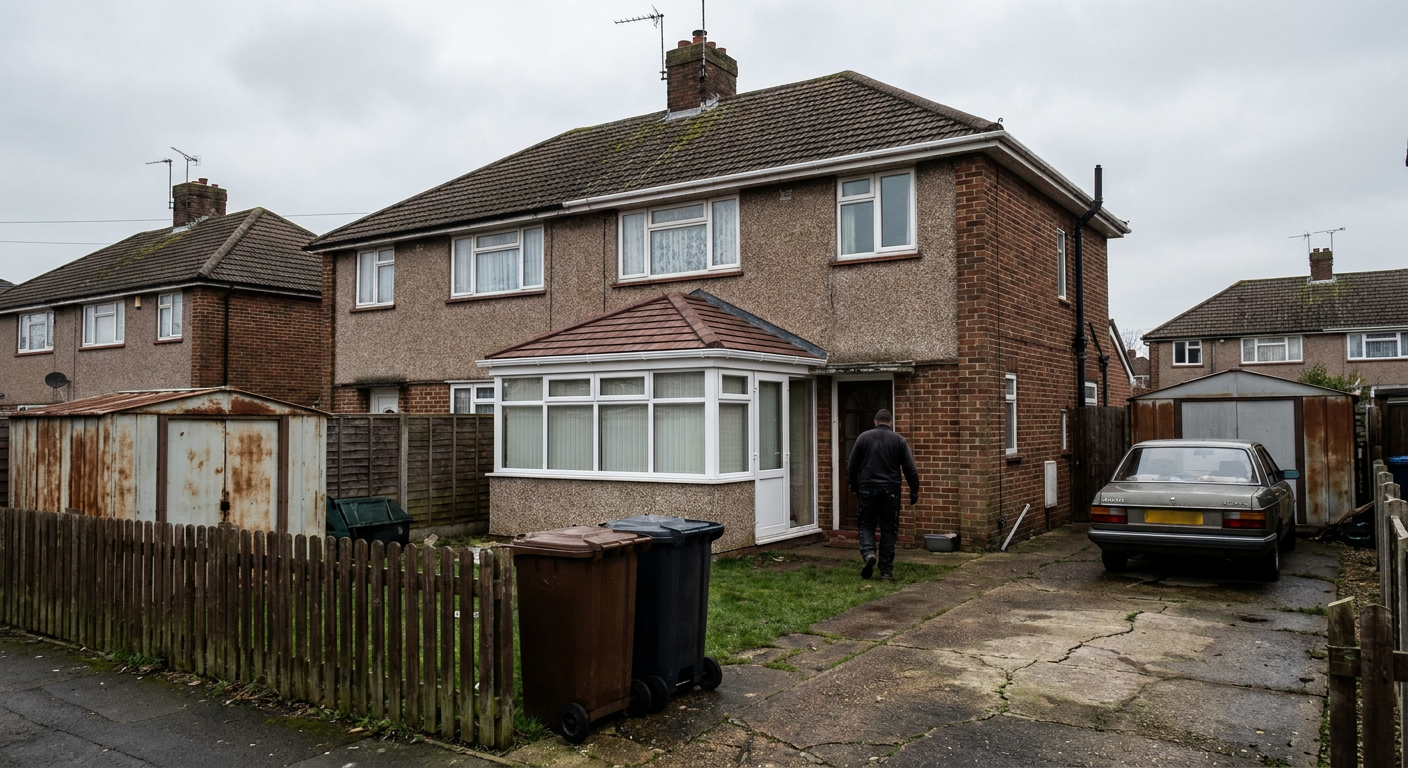
Room empties after October
If you stop sitting in the conservatory once temperatures drop, the roof is likely losing heat faster than your radiators can replace it.
- 2
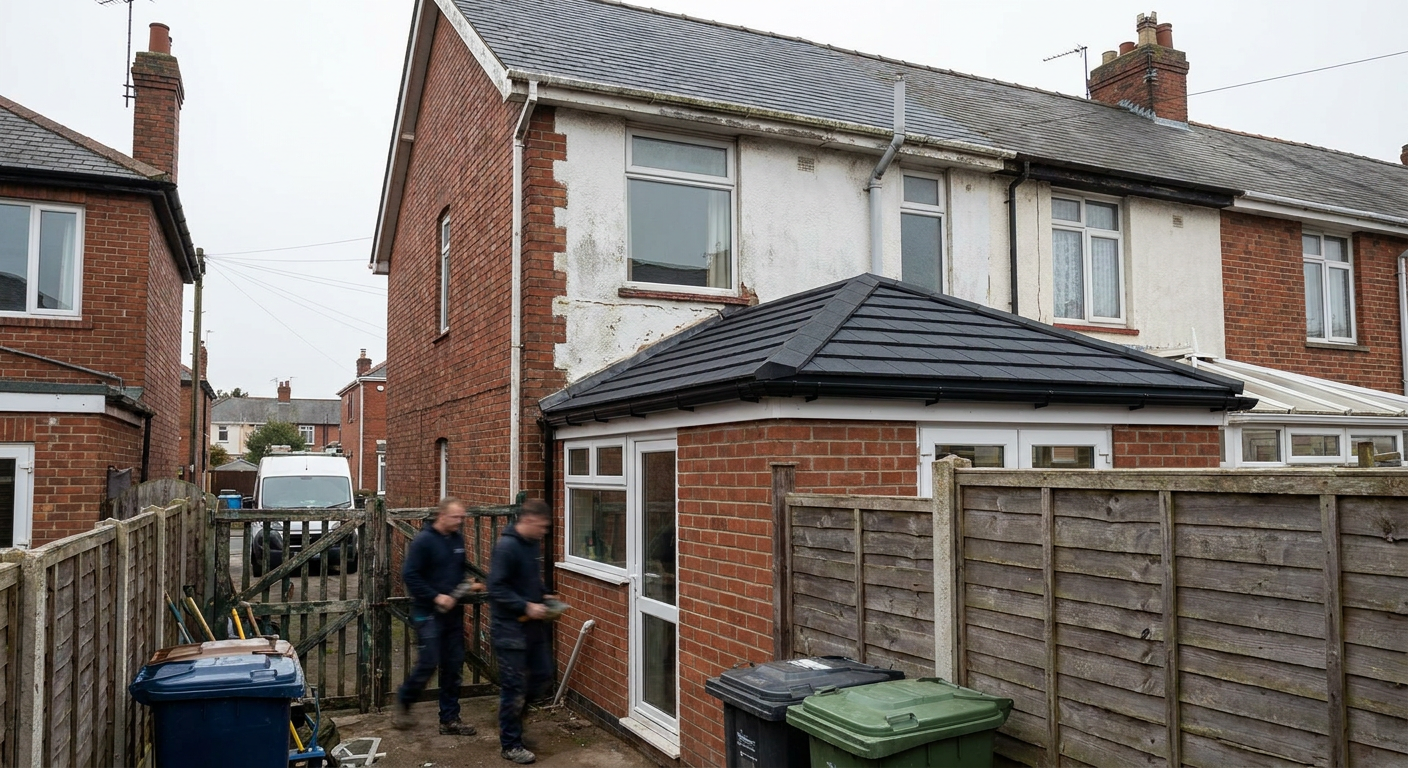
Blinds stay drawn all summer
Constantly blocking the sun suggests the glazing admits too much solar gain for the room to stay comfortable without shading.
- 3
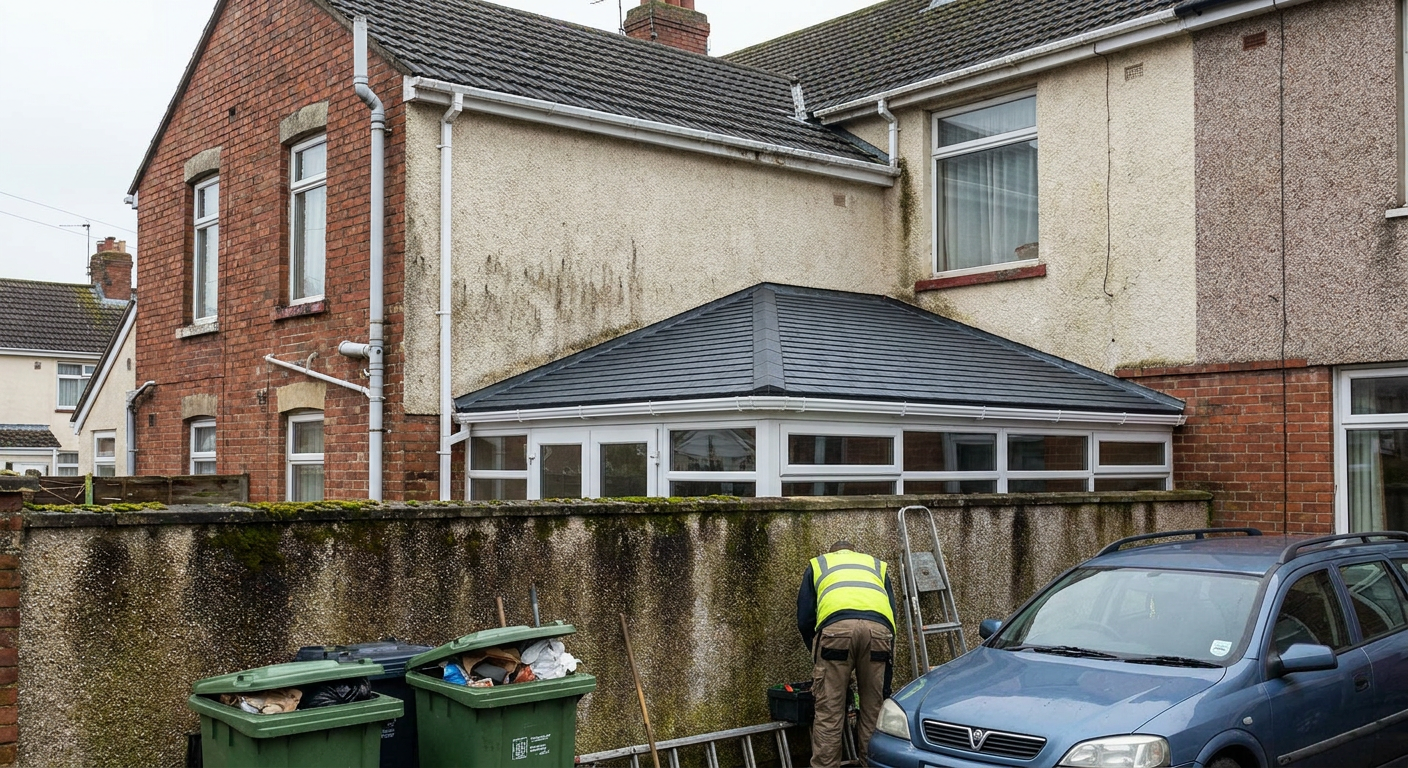
Loud drumming in rain
Heavy noise during showers usually means thin polycarbonate or single-layer panels that lack mass to absorb impact sound.
- 4
Damp patches on the ceiling
Moisture marks on the internal surface point to condensation forming where warm air meets a cold roof panel.
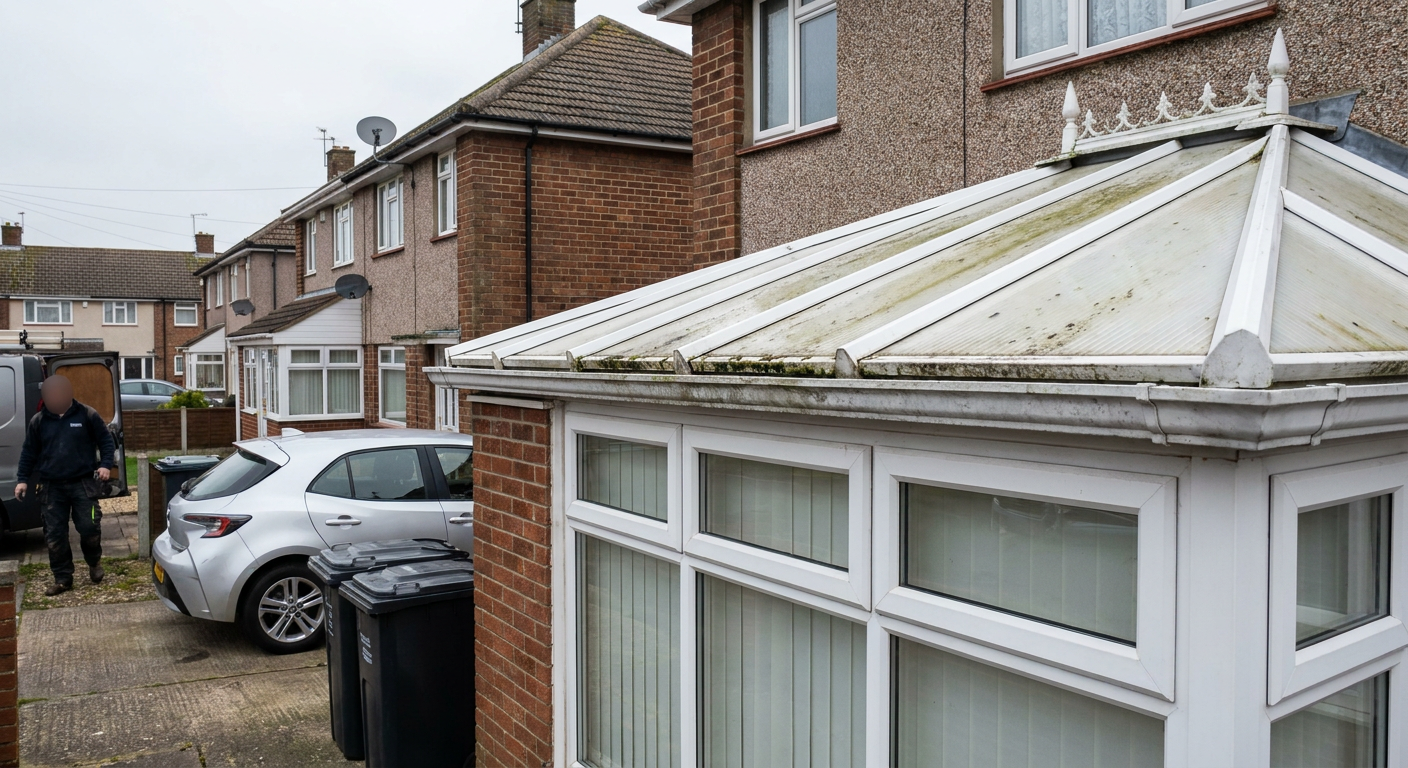
- 5
Visible sag in the frame
A dip along the ridge bar or eaves beam can mean the structure is carrying more weight than it was designed for.
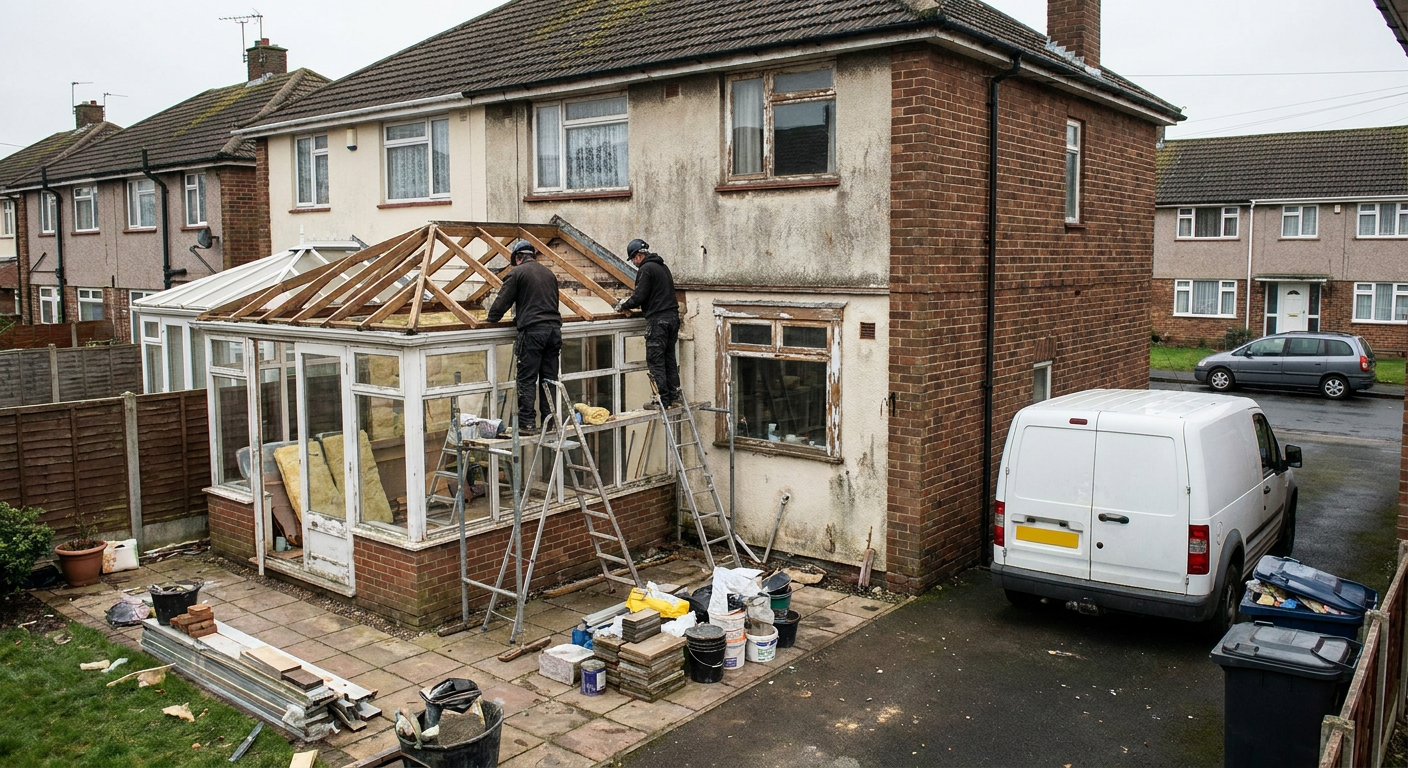
Working out how soon to act
These situations help you judge urgency. Only a physical inspection by a specialist firm can confirm what is happening with your specific conservatory, so treat this as a guide to timing rather than a verdict.
-
Water dripping inside when it rainsToday
A leak through the roof panels or seals risks damaging flooring, furniture and electrical sockets below it.
What to do Ask for an inspection before the next heavy rainfall.
-
Frame bowing visibly along the ridgeToday
Structural movement suggests the frame is overloaded or the joints have failed and need assessment.
What to do Stop using the room and arrange a structural check.
-
Room unusable from November to MarchSoon
Poor thermal performance means the heating cost outweighs the benefit of having the space.
What to do Request a quote for insulated or tiled replacement panels.
-
Condensation pooling on the inside glassSoon
Warm moist air is hitting a cold surface, which can lead to mould growth on nearby walls and frames.
What to do Ask the specialist fitter about adding roof windows or switching to better-insulated glazing so your conservatory stays comfortable all year.
-
Faded furniture directly under the roofWorth watching
Ultraviolet transmission through older glass or polycarbonate degrades fabric and wood finishes over time.
What to do Consider UV-filtering glass or a solid roof section.
This is not a diagnosis of your home. If anything has changed suddenly or is getting worse quickly, ask about it now rather than waiting.
Tell us about your conservatory
Send a description of your room and what you want it to do. A specialist firm will read it and reply with what makes sense for your home. There is no charge and no commitment to proceed.
- No obligation
- Free to enquire
- Local firms only